

Hydrate
{A Written Practice}
Hydrate
Drink water
Most modern people do not drink enough water. We are chronically and habitually dehydrated. We are so used to not having enough water that we don't feel thirsty when we are dehydrated, because the setpoints in our awareness have shifted. There is also a relationship between the stress response and chronic dehydration. If you are experiencing sympathetic nervous system activation: if you are in a fight or flight response, which you will know because you feel either some flavor of anxious or angry or burned out, you are most likely dehydrated. If this is the case, take a look at the drinking recommendations in Coming out of a High Intensity Push. If your interest in hydration is more general, keep reading here.
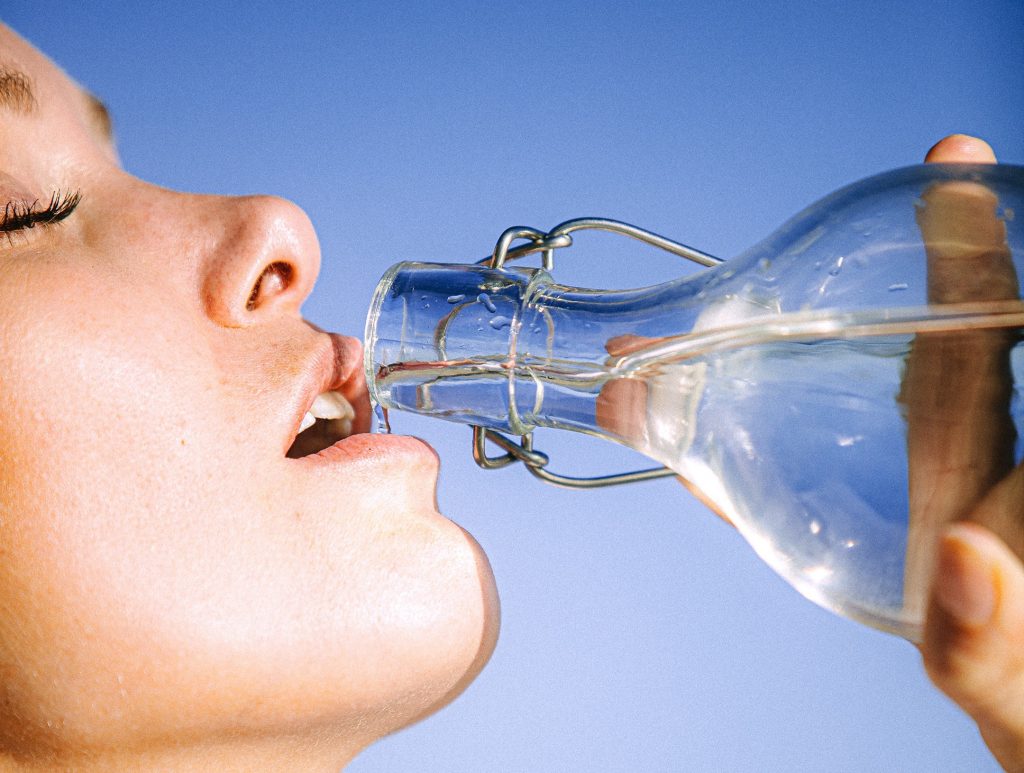
When you do drink, turn it into a restorative practice by paying attention. Attend to the sensory qualities of water in your mouth, water moving down your throat. Being hydrated doesn't mean mechanically forcing yourself to drink great quantities. It means becoming more aware of what it feels like to be nourished with water. Most of us don't drink nearly enough. The standard recommendation is 64 ounces (8 cups or 1.9 Liters) per day, but this does not account for variations in human size, how much we sweat due to exercise or heat, or elevation.
Relationship between body weight, size, and water requirements:
Please note that this also is connected to elevation and air temperature and activity levels. For women who are pregnant or nursing, water requirements are also higher. When it is hot, and we are sweating a lot, we need more water. When we are exercising alot, we need more water. The generic recommendation is to drink 8 glasses of 8 oz per day (64 oz, which is a half gallon, or 1.9 Liters). The Mayo clinic says that on average, men should drink 15.5 cups of liquid per day (3.7 Liters), women should drink 11.5 cups per day (2.7 Liters). Since about 20% of this comes from liquid in our food, and this includes all beverages, not just water, the recommendation to drink 8 cups (1.9 Liters) is generally pretty good. The real point here is that most of us are not drinking that, and that most of us are chronically dehyrated and unaware of it. Creating a routine where you drink more water on purpose is generally useful.
Related Practices:
This practice is in the Nourish Yourself category. This includes Proper Nutrition, Eat Seasonally, Cook for Yourself, and Don't Drink that Stuff. It is connected to Coming out of a High Intensity Push. It is also related, elementally, to Living Water.Photography: | Licensed from Pexels.com, used with permission.